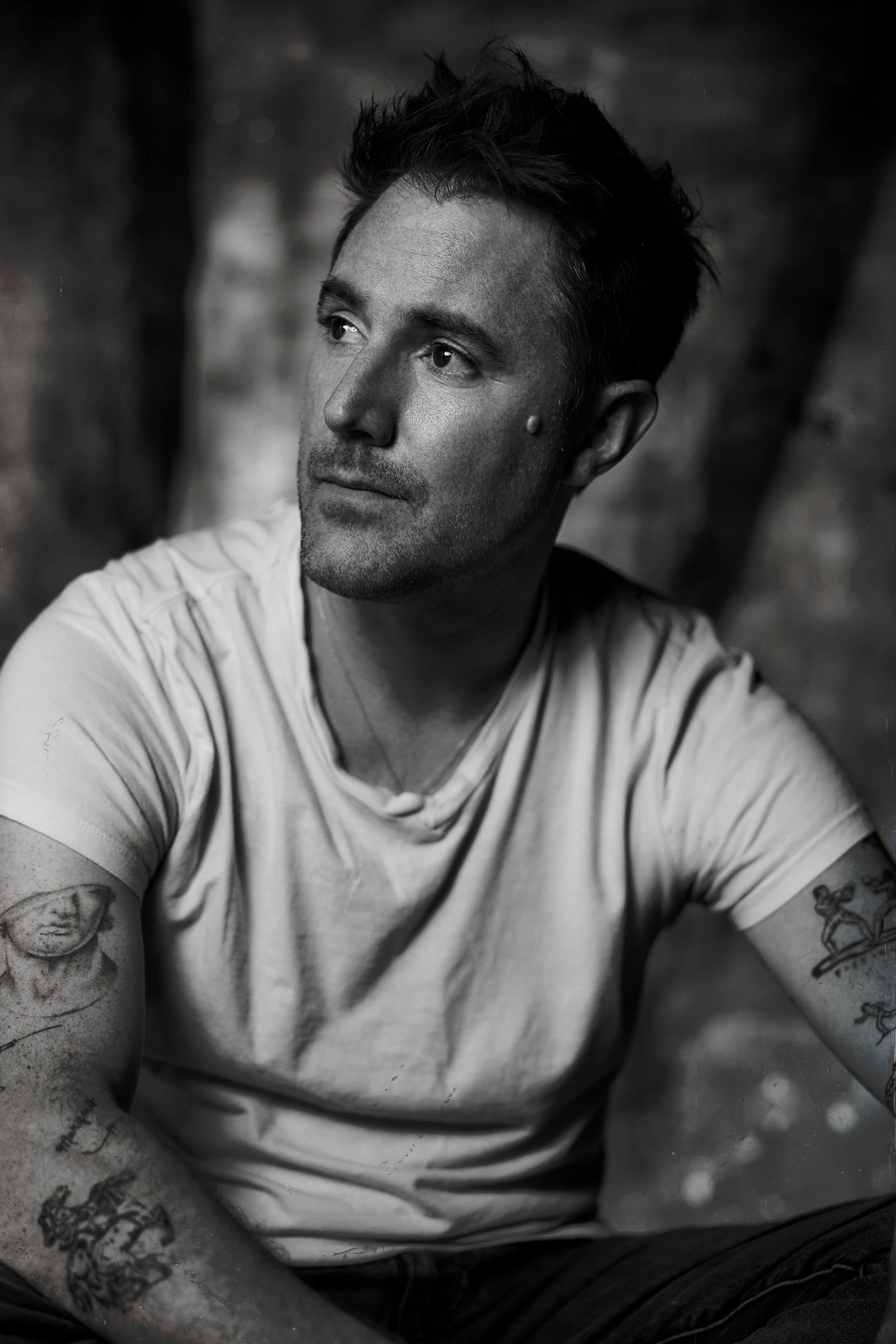
One of the most original composers working in film and television today, Keegan DeWitt has built an expansive career defined by a singular guiding instinct: to approach every project as a wide-open field of possibility. Driven by a deep love of cinematic storytelling, he resists the easy impulse to reinforce what’s already unfolding in the frame and reaches for something more layered, unexpected, and true to the complexity of the human experience. With his filmography spanning from the Academy Award-winning documentary short Inocente to Netflix’s massively popular rom-com People We Meet On Vacation, DeWitt brings a sensibility rooted in daring emotionality, where nothing is flattened or simplified and the most melancholy of moments are allowed their full, contradictory depth. The result is a body of work that never takes the obvious path—music that quietly but indelibly reshapes the world of the story being told onscreen.
Originally from Oregon, DeWitt took up guitar and piano as a little kid, leaning into an intuition-led means of expression that remains central to his musicality. During his high school years, he played in a series of punk bands while attending Pacific Crest Community School in Portland, where two formative teachers introduced him to the romantic lyricism of writers like Pablo Neruda and Louise Erdrich as well as to the fundamentals of writing for stage and screen. Alongside his best friend and future collaborator Aaron Katz, he spent hours immersed in an unconventional exercise: beginning each class with a blank sheet of paper, closing their eyes, scribbling, then writing from whatever image surfaced—never stopping, never judging, never editing. That same spirit of curiosity and improvisation quickly extended into DeWitt’s musical life. On long bus rides home, he absorbed everything from pop to experimental music, then returned to the piano in his family’s living room and lost himself in a freeform search for chords, melodies, and textures, propelled by a profound willingness to step into the unknown. At the same time, he and Katz pursued their filmmaking ambitions by slipping into screenings at local theaters to catch short-fun films passed along through word-of-mouth, then stayed up late to watch At the Movies as critics Gene Siskel and Roger Ebert clued them in to a nascent film festival called Sundance.
While enrolled at SUNY Purchase, DeWitt deepened his cinematic language by digging into the work of filmmakers like Michelangelo Antonioni, Frederick Wiseman, and Agnès Varda, simultaneously self-recording his own songs on a Tascam 4-track—ultimately treating songwriting as a kind of character study inspired by the outlandish personalities he encountered at film school. During that time, he cut his teeth in scoring by composing the music for Katz’s debut film Dance Party USA, dreaming up the score on a laptop perched atop the same piano he’d grown up playing. After premiering at South by Southwest in 2006, the film brought DeWitt into a rising creative community of voices on the cusp of reshaping independent cinema, including generational touchstones like Lena Dunham and Greta Gerwig.
After a period in New York spent balancing scoring work with his development as a songwriter, DeWitt relocated to Nashville, where he co-founded the indie-rock band Wild Cub and filtered his cinematic vision through their atmospheric sound. Their debut album Youth yielded the breakout single “Thunder Clatter” (inspired by the moment he met his wife), which amassed tens of millions of streams and earned widespread radio play. But even amid the band’s remarkable success (including performing at landmark festivals like Lollapalooza and appearing on Conan and The Tonight Show Starring Jimmy Fallon), DeWitt felt pulled back toward the improvisational freedom and unparalleled storytelling potential of film. As touring slowed and family life took precedence, he returned to scoring and landed projects like HBO’s Divorce (a mid-2010s HBO comedy-drama starring Sarah Jessica Parker) and Katz’s Gemini (a 2017 mystery thriller featuring Lola Kirke, Zoë Kravitz, and Greta Lee)—a shift that led him to L.A., where he’s lived since 2016.
Across his ever-expanding filmography, DeWitt has become known for a genre-agnostic approach that continually reframes expectations. Rather than amplifying the most readily signaled emotional cues, his scores operate in counterpoint and widen a project’s tonal world by introducing contrast and nuance. In the critically lauded Tim Robinson vehicle Friendship and Robinson’s cult-hit HBO series The Chair Company, for instance, he channels what he describes as “Hitchcock in a blender,” applying a kind of brutalist deconstruction to material that might otherwise invite straightforward comedic scoring. Conversely, his chamber-driven work on All the Bright Places starring Elle Fanning (a 2020 romantic drama whose score gained major traction on streaming platforms and social media) sidesteps the usual YA tropes and delivers a tender yet resplendent meditation on youth and loss.
DeWitt’s command of tonal shading also carries through to projects like The Threesome (a 2025 American rom-com/drama directed by his longtime collaborator Chad Hartigan), where a Gershwin-inspired palette of strings and woodwinds lends a lovely elegance to a premise that might suggest broad irreverence. Meanwhile, in People We Meet On Vacation, marimbas intertwine with a 52-piece orchestra to evoke the emotional ambition of iconic romantic comedies while honoring the flawed humanity at their core. Over the years, he’s also thrived in the rarefied creative freedom afforded by repeat collaborations with idiosyncratic filmmakers like Alex Ross Perry—a decade-plus-long partnership that’s yielded such unusual opportunities as the staging of an Off-Broadway musical within Perry’s 2024 pseudo-documentary PAVEMENTS.
Now living in Altadena, DeWitt conceives most of his compositions on piano and works primarily out of his home studio, an environment he considers essential to the highly exploratory nature of his creative process. That sense of immersion was tested during the production of People We Meet On Vacation, which he began scoring just as the catastrophic wildfires of early 2025 forced his family to temporarily relocate to California’s Central Coast. Determined to move forward with the work, he headed back home at the height of the fires and secured permission from the National Guard to retrieve his gear, completing the score under extraordinary circumstances.
With his upcoming projects including Off Campus (an Amazon Prime series based on the bestselling book series), a reboot of the millennial classic 13 Going on 30, the second season of The Chair Company, and the Hartigan-directed Sunbaked, DeWitt remains guided by an abiding passion for film—an obsession he traces back to viewing Paul Thomas Anderson’s Boogie Nights and Terrence Malick’s The Thin Red Line in quick succession as a teenager. Whether crafting the score to an intimate indie feature or large-scale studio production, he returns again and again to the foundational impulse first discovered in that Portland classroom: to begin without preconception, embrace unfettered curiosity, and follow the work wherever it leads.